
No products in the cart.
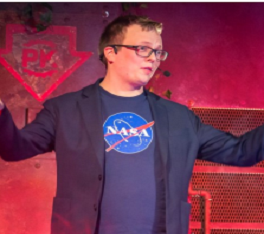
Henri Terho is an experienced startup and R&D Leader, with experience from both running businesses, to building high tech ventures. He founded his first company year 1 at the University of Tampere, Finland and has since has been involved in multiple startups, ranging from healthcare to AI and automotive. Henri has been part of unicorn scale startups and helped drive software development, marketing and strategy in these companies. MSc Software engineering, BSc Computational Systems Biology Currently completing his Phd on software startups.
Interview with HENRI TERHO – CTO
Interviewer: How are you using artificial intelligence and machine learning in your operations at Breathing Fish?
Henri: To improve yield, predict future outcomes, and automate certain processes, we are using machine learning to apply a technique called combinatorial optimization, which is an advanced form of AI that helps us derive the optimal solution from a set of finite options. For example, we may combine weight with other factors to determine the best growth rate for a group of fish. All ML and AI processing will be done within our cloud computing platform, and fish tank status and fish growth analytics will be available through our cloud dashboard.
Interviewer: Can you tell us more about the sensor boxes that you are using in your fish tanks?
Henri: Yes, we are deploying waterproof sensor boxes in each fish tank that will continuously stream raw data directly to our cloud data lake. These sensor boxes will contain cameras, temperature sensors, light sensors, and other necessary sensors that will track the desired activity of each fish, measure their dimensions, and monitor the transparency of the water, temperature, and light time.
Interviewer: How are you using machine vision in your operations?
Henri: We are using a machine vision approach where a camera watches the fish tank and cloud computers perform analytics based on uploaded images. This approach allows us to leverage open source technology and widely available trained talent, rather than specialized technologies like sonar or radar that require specific expertise. It is also possible to add edge computing capabilities to our sensor boxes to perform machine vision tasks locally and reduce data communication costs, but we believe that cloud data processing will provide the right balance given the growth speed of our fish and the cost and environmental changes involved.